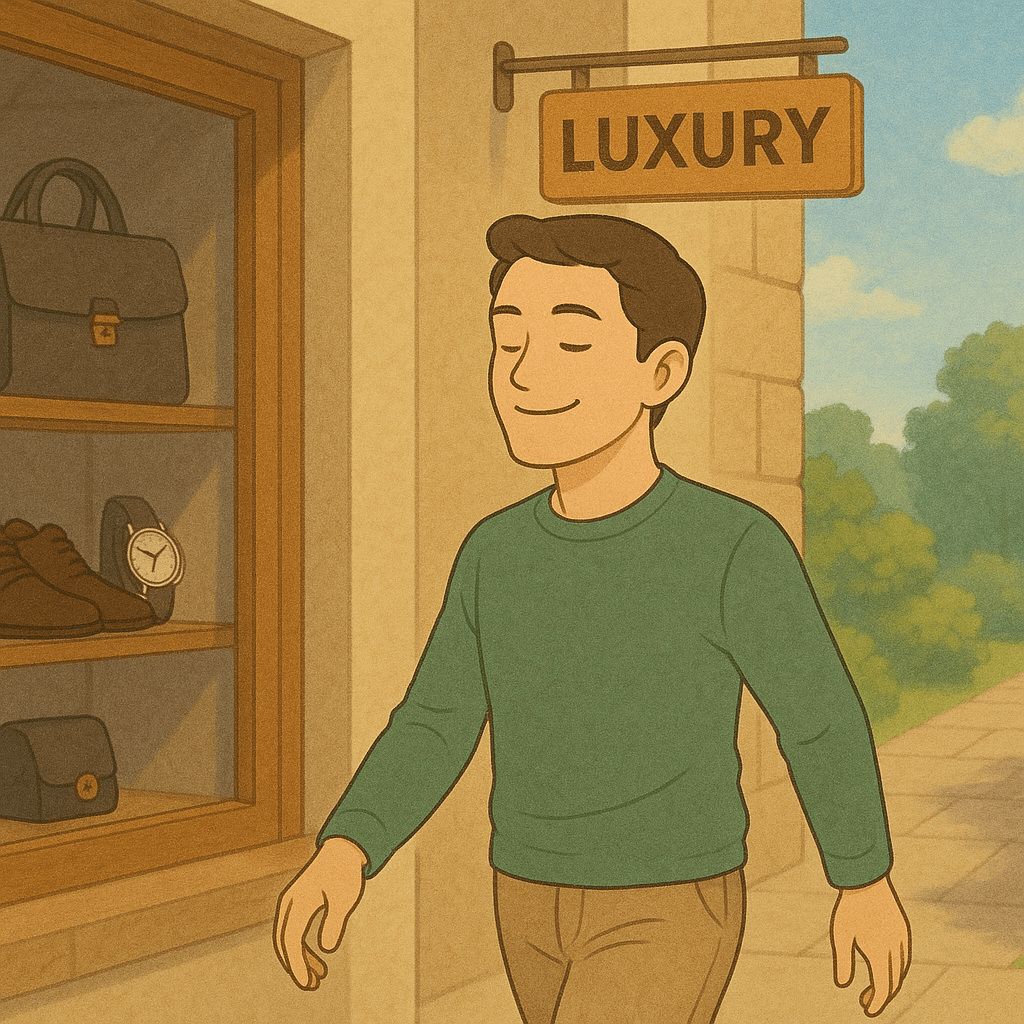
Let’s talk about luxury today.
But before we dive in, a little personal backstory — during my MBA, I took a course called Behavioral Finance. It was my first introduction to the fascinating intersection of psychology and money. A standout course that left a lasting impression.
We explored how our financial decisions are shaped not just by logic, but by a swirl of emotions, biases, and social cues. Among the many topics, we also studied legendary value investors — with Warren Buffett, of course, taking center stage.
While I don’t actively invest in stocks, that course fundamentally reshaped my outlook on money — and how we relate to it.
Which brings me to luxury — a topic I’ve observed and reflected on deeply, especially after spending the last decade in bustling metros. Here, luxury isn’t just a lifestyle; it’s a cultural script. It’s everywhere — on hoardings, Instagram, dinner table conversations, and even in the unspoken language of aspiration.
So I began to ask myself: what does luxury really mean to me? What place should it have in my life?
The Pull of Luxury
Luxury is anything that extends beyond necessity — high-end fashion, opulent watches, curated experiences, rare collectibles. It’s subjective and fluid. For some, it’s a luxury sedan. For others, a weekend in the hills with no notifications.
I enjoy it too — a beautiful handbag gifted by my husband on my birthday, a stay at a serene luxury resort on our anniversary. Moments like these do add joy.
But the real question is: how much, and how often?
Because luxury, if unchecked, can start to resemble an addiction — much like sugar or alcohol. A high that demands repetition, but never quite satisfies.
It gives the illusion of wealth, even as it quietly chips away at it. It feels empowering in the moment, but over time, it can enslave us to a lifestyle that is far removed from real security or grounded happiness.
A Slippery Slope
The moment luxury becomes a perceived necessity, we’re on fragile ground.
Why? Because life is unpredictable. Layoffs, illnesses, economic downturns — these aren’t edge cases; they’re eventualities. And a lifestyle rooted in consumption, without the cushion of true financial independence, is vulnerable to every shockwave.
Spending beyond our means to “keep up” — whether with others or with our own past choices — is a quiet erosion of freedom.
It’s like building a beautiful home on a shaky foundation. One tremor, and the facade starts to crack.
Choosing Strength Over Sparkle
None of this is to discredit the craftsmanship and brilliance behind luxury goods. Many are testaments to human creativity and precision. But luxury, by definition, is about excess — and excess rarely brings lasting peace.
So, instead of chasing luxury for its own sake, what if we directed surplus funds toward financial independence? Towards creating a foundation that gives us agency, not anxiety?
That gives us the freedom to choose — not just what to buy, but how to live.
Because the quiet confidence that comes from being financially secure? That’s a luxury too. One that lasts.
A Healthier Relationship with Luxury
So the next time you feel drawn to splurge, ask yourself:
- Am I approaching this from a place of strength or from a need to compensate?
- Would I be unhappy if I didn’t have it? (Hint: the answer should be “no.”)
- Is this spending adding to my sense of freedom — or taking from it?
Luxury is beautiful. But it’s also a test. A test of how grounded we are in what truly brings us joy, meaning, and peace.
What’s your relationship with luxury like? Has anything you bought ever brought you lasting happiness?
I’d love to hear your thoughts — share them in the comments below.
Until next time,
Stay happy. Stay healthy.
 The Sunday Draft
Leave a comment