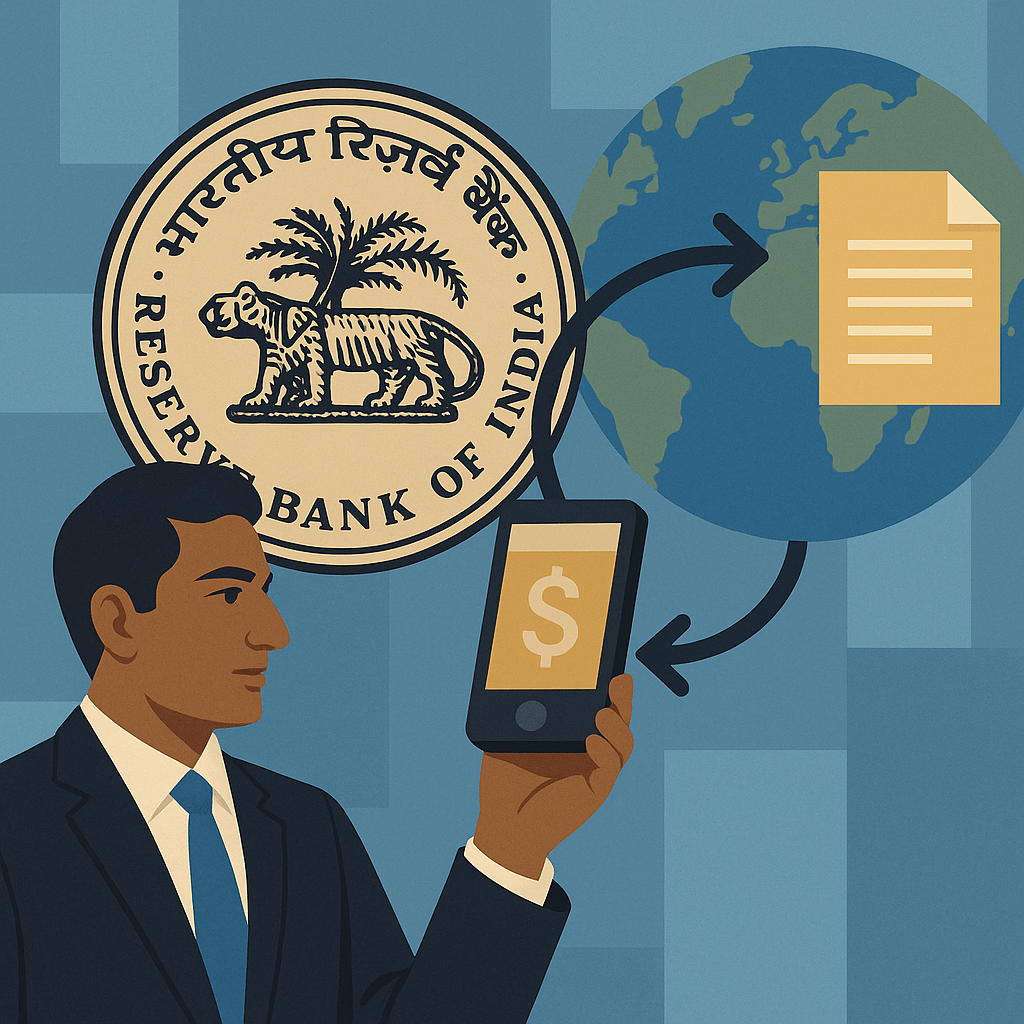
Over the past 10+ years of building fintech products, I’ve witnessed firsthand how regulatory frameworks, owning to their rather prescriptive nature, can either stifle innovation or catalyze transformation. The RBI’s recent Payment Aggregator-Cross Border (PA-CB) circular thankfully (and hopefully it stays so) represents the latter—a pivotal moment for India’s cross-border payment landscape.
PA-CB: An overview
The October 2023 circular brings all entities facilitating cross-border payment transactions under direct RBI regulation, creating three licensing categories:
- Export only PA-CB (PA-CB-E)
- Import only PA-CB (PA-CB-I)
- Export and Import PA-CB (PA-CB-E&I)
I especially appreciate the approach of having 3 categories which creates a better foundation for innovation by allowing fintech companies to build focused solutions for specific segments rather than one-size-fits-all solutioning.
The category-specific licenses (Import-only, Export-only, and combined) recognize that different businesses have different needs:
- Export-focused businesses primarily need solutions for receiving payments and repatriating funds.
- Import-dependent businesses need solutions for making payments and managing supplier relationships
Companies will now to able to:
- Develop deeper expertise in particular trade flows
- Create targeted features that address specific pain points (e.g., specialized tools for export documentation vs. import payment scheduling)
- Optimize their internal compliance and operational structures for particular use cases
Unlocking SME growth through Fintech innovation
Indian SMEs have historically faced significant barriers to global trade – complex documentation, opaque FX rates, high fees, and limited access to formal banking channels. The challenges of global trade affects businesses of all sizes, but they impact SMBs (Small and Medium Businesses) disproportionately compared to larger enterprises for several structural reasons like – lack of negotiating advantage when it comes to FX rates (due to smaller transaction size), lack of specialized staff to manage compliance, limited credit history to avail advanced banking solutions, just to name a few.
The PA-CB framework creates opportunities for fintech companies to solve these pain points through:
- Streamlined Compliance: With clear regulatory guidelines, companies can focus on building solutions rather than navigating regulatory uncertainty
- Digital-First Approaches: The framework embraces digital KYC and automated processes that reduce friction
- Specialized Solutions: The category-specific licenses enable tailored products for export-focused or import-dependent businesses
India’s Regulatory Approach in Global Context
India’s approach to regulating cross-border payments strikes a balance between innovation and oversight that stands out globally:
- More Progressive than China: While China maintains strict capital controls, India has created a regulated pathway for innovation. In China, Foreign exchange is tightly regulated, and there are significant restrictions on who can facilitate cross-border payments and how much can be transferred.
- More Structured than US/UK: Unlike the fragmented regulatory landscape in Western markets, India offers clear guidelines with reasonable compliance requirements. In the US, for example, a cross-border payment provider might need to navigate state-level money transmitter licenses, federal regulations, and banking partnerships, creating a patchwork of requirements.
- More SME-Friendly than Singapore: Singapore’s regulatory framework caters primarily to larger enterprises, while India’s PA-CB approach specifically considers SME use cases. Singapore’s regulations are designed to maintain its status as a global financial center, with particular emphasis on serving multinational corporations and financial institutions. This creates an ecosystem where the regulatory framework, supporting services, and even the cost structure naturally favor larger enterprises over SMEs.
*The ₹25 lakh transaction limit per unit of goods/services is particularly noteworthy – high enough to accommodate meaningful B2B trade while maintaining appropriate risk controls.
The Market Opportunity
Since the circular’s release in October 2023, several major fintech players have secured PA-CB authorizations, while others have secured in-principle approval.
India’s 63 million+ SMEs contribute nearly 30% of GDP and 40% of exports, yet only 8-10% currently participate in global trade. With rising internet penetration and digitization accelerated by initiatives like UPI, the appetite for global market access has never been stronger.
For global and Indian fintechs, this represents a massive opportunity:
- 500B+ market: India’s annual SME import/export trade presents a significant revenue opportunity
- Digital-first merchants: A new generation of online sellers seeking streamlined global solutions
- Complementary ecosystem: Integration opportunities with domestic payment networks, ERP systems, and supply chain platforms
Navigating Global Challenges
While the PA-CB framework creates domestic opportunity, global headwinds remain. The rise in tariff disputes between major economies threatens to complicate cross-border trade. Fintechs operating in this space must build flexible systems that can adapt to changing duty structures, compliance requirements, and trade routes.
Yet these challenges also create opportunities for differentiation. Companies that can abstract away complexity, provide real-time regulatory guidance, and optimize for cost efficiency will capture outsize market share.
Looking Ahead
As we enter this new era of regulated cross-border payments, I’m particularly excited about innovations in:
- AI-powered compliance automation
- Embedded finance options for cross-border trade
- Multi-currency management solutions tailored for SMEs
Having worked on platforms that processed international trade transactions, I believe the PA-CB framework represents India’s most significant step toward democratizing global trade access for small businesses.
What are your thoughts on how these regulations will shape India’s position in global trade? Are you building or using solutions in this space?
 The Sunday Draft
Leave a comment